Hand function after a stroke
Joanna Łapińska
MSc in Physiotherapy
Therapy results
What patients say about us
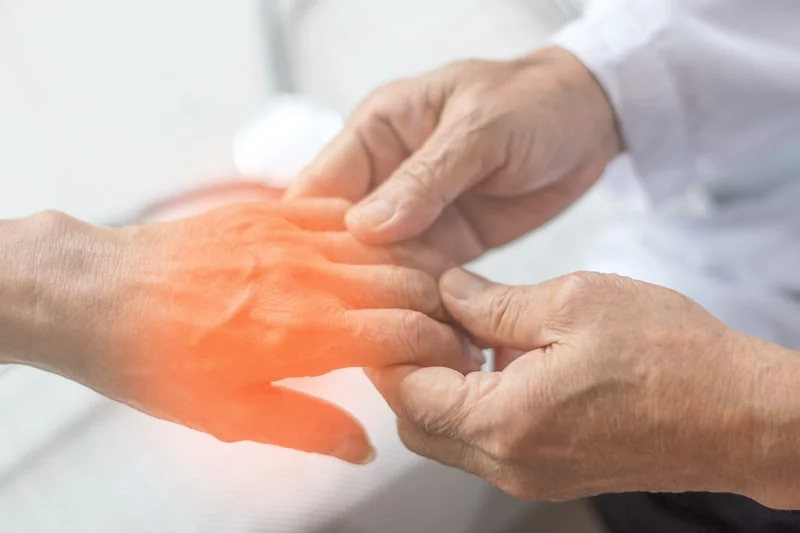
Paresis or paralysis of the upper limb is one of the most common problems limiting independence in patients after a stroke.
The hand performs sensory, gripping, manipulative and protective functions, and it also plays a part in keeping balance. This is why the question of how long it takes for these functions to return, and when the limb will start to help with everyday tasks, comes up very early after a stroke — especially when there is paresis of the upper limb.
The answer to this question is not clear-cut, and most honestly it is: it depends. The return of hand function after a stroke results from many overlapping factors, which have to be assessed individually in each patient.
No two strokes are the same.
To put it plainly, every stroke has its own character. They differ in the location of the areas of damage visible on a CT or MRI scan, in the extent of the death of nervous tissue and in how quickly medical help was provided.
During a stroke, as a result of bleeding or a lack of blood supply to a particular area of the brain, neurons die. If the decision to use thrombolytic treatment, neurosurgical intervention or blood-pressure-lowering treatment was made quickly, this improves the patient’s chances of regaining function thanks to the cells of the penumbra, which have not died off completely.
Neuroplasticity of the brain.
The human being has the potential to repair and reorganise the structures of the brain. With the right stimulation during well-planned neurological rehabilitation programmes, this phenomenon can be modulated as effectively as possible, which directly affects the return of upper limb function.
Neurological rehabilitation.
The basis of working with the upper limb is loading it under the right conditions and activating the “weaker” hand as therapy progresses. This calls for precisely chosen exercises, control over the quality of movement and consistent work on the function of the hand and shoulder.
The hand is a tool for very precise activities, which is why it has a larger cortical representation than the entire lower limb. In practice, this means that after a stroke a patient often manages relearning to walk after a stroke more quickly than performing complex tasks with the hand, such as writing or doing up buttons.
Good prognostic signs for the return of hand function are selective movements in the joints and early movement of the thumb. At the same time, shoulder pain, spasticity of the limb and the possible need for orthopaedic aids — for example stabilisers to prevent further partial dislocation of the shoulder joint — have to be assessed individually.
In practice, the chances of regaining function increase when rehabilitation is introduced early, carried out regularly and tailored to the patient’s actual deficits. Just as important is engaging the hand every day, because a neglected limb improves more poorly — something we write about in our piece on the neglected hand after a stroke — along with continuity of care after discharge from hospital and informed support from the family during everyday activities.
References
- Markus H, Pereira A, Cloud G. “Stroke Medicine”, vol. II, Lublin 2018.
- Opara J. “Neurorehabilitation”, Katowice 2017.
Read next
Loss of speech after a stroke. Aphasia and the role of the speech therapist in the therapy process.
Aphasia after a stroke is the loss of the ability to understand and produce speech. We explain the types of aphasia, the role of the speech therapist and the directions rehabilitation can take.
Read more →
Can every stroke patient be rehabilitated?
Whether rehabilitation after a stroke is possible depends on the patient’s health, the time since the event and the right choice of therapy. We explain when rehabilitation is possible and how to find the right course of action.
Read more →
When should rehabilitation after a stroke begin?
Early rehabilitation after a stroke usually starts on the neurology ward, but its scope and pace always depend on the patient’s condition and the doctor’s decision.
Read more →
Stroke – brain areas and the effects of brain damage.
The brain is the source of our identity, intellect and emotions. Here is a short guide to the different areas of the brain and the deficits that can arise when they are damaged by an ischaemic stroke.
Read more →
Stroke – emotions, mood and depression
A stroke can damage the brain structures responsible for regulating emotions and mood, which is why depression, anxiety, motivation problems and difficulties with rehabilitation can appear afterwards.
Read more →
Stroke symptoms: how to recognise them and how to respond?
Recognising the symptoms of a stroke quickly and calling for help immediately can save a life and reduce the risk of lasting complications.
Read more →
Spinal cord injury vs spinal cord stroke. What is the difference?
A spinal cord injury and a spinal cord stroke are two distinct conditions with different causes, prognosis and potential deficits. We explain the key differences and the typical consequences of spinal cord damage.
Read more →
10 most common mistakes made by neurological physiotherapists.
Karolina Łozińska describes the most common mistakes made during neurological therapy and the working principles that help to avoid them.
Read more →
Memory loss after a stroke. What it involves and what can help.
Memory loss after a stroke can involve difficulty remembering words, recognising places and learning new things. We explain what can help in everyday functioning and therapy.
Read more →
The next step
Let's talk
We are here to answer any questions you may have about the rehabilitation process.
Describe your case
Send us the details of the patient's condition and we will assess them from a therapeutic perspective.
Email consultation
Write to us describing the condition and the patient's current state of health. We will reply with our view of your situation in the context of rehabilitation.
Video of the patient
You can send us a video showing the patient's current condition. We will respond to your situation and explain the therapeutic options available.