The Neglected Hand After a Stroke
Joanna Łapińska
MSc
Therapy results
What patients say about us
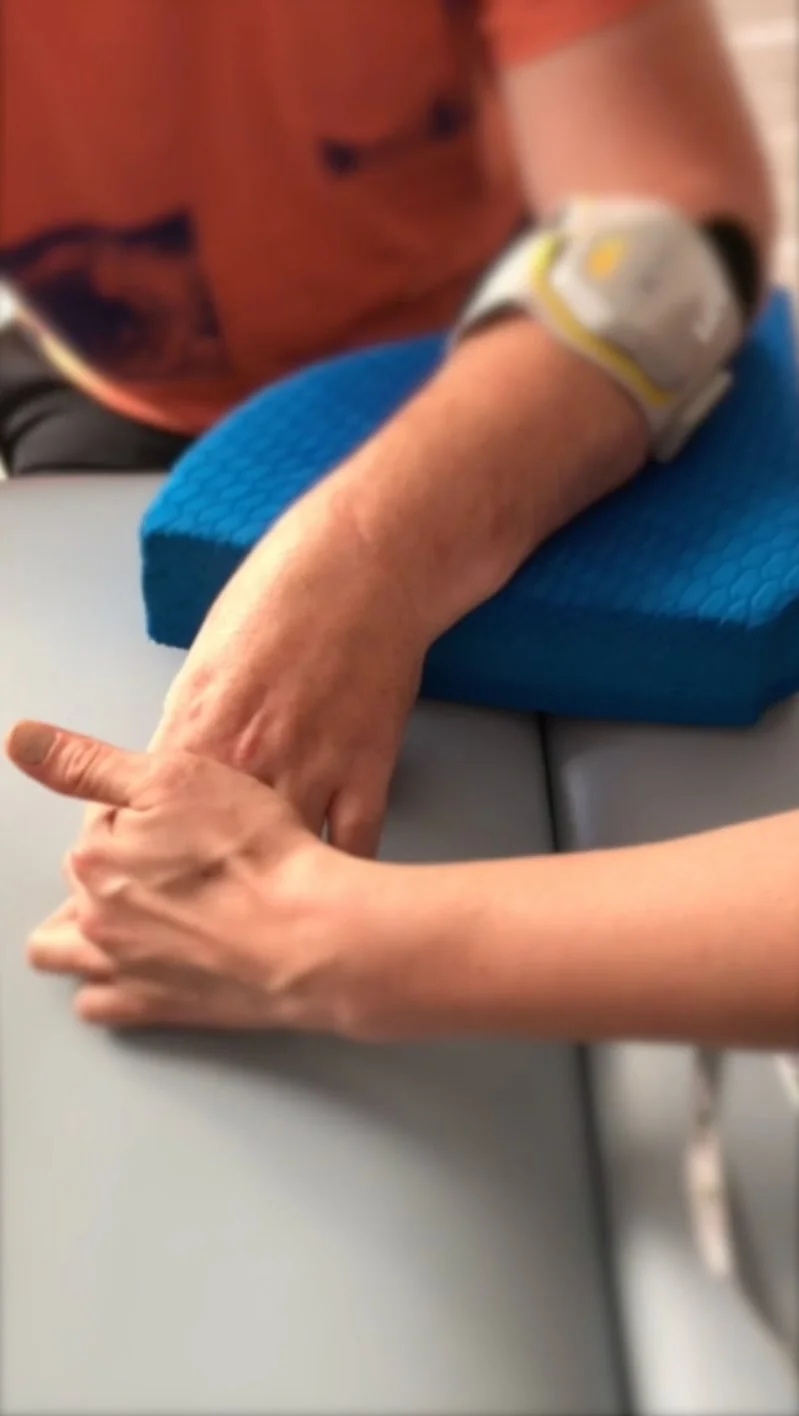
“Sometimes I would like to cut my hand off, because it only gets in the way. It’s like a log. Dead, and it does nothing.” In practice I often come across this kind of statement, and then I ask the patient, “What will happen once you have cut it off?” — the most common answer is, “The problem will be gone.”
In neurorehabilitation it is very difficult to estimate how much more can still be achieved. There is, however, scientific evidence for the fact that a hand that is used improves more than a hand that is neglected — so it is equally clear that a hand that has been cut off does not improve at all. For this reason, therapy for upper limb paresis is based on regularly engaging the hand, and when we weigh up the gains and losses, it is more worthwhile to take the risk and trust in the brain’s neuroplasticity.
It is worth setting short-term goals. As the days of therapy go by, the patient may notice for themselves that sensation in different parts of the body is improving, that the hand is no longer so sensitive to temperature and touch, and that they are beginning to “like” it and are more willing to use it in everyday activities. When and to what extent hand function returns after a stroke depends on many factors, but observations like these are a success and bring the patient closer to a long-term goal — for example, restoring handwriting skills.
Patients’ expectations are usually far removed from the hand’s current capabilities, because from the very start they set their sights on long-term and spectacular results. Often the limb is not yet structurally ready to take on a function. Such matters are assessed individually, and this is not about taking away hope, but about making the patient aware that if we restore the ability to hold a pen, then perhaps in the future it will be possible to write.
The neglected hand is an integral part of the body
Sometimes it is enough to make the patient aware that the hand is not useless at all. It is part of the body’s mass and plays a role in the trajectory of walking, which would certainly change if the limb were amputated.
At first glance, a hand affected by a stroke can be alarming, with its bluish colour, curled position and coldness — these are unhealthy-looking features that result from the temporary inactivity of the muscle pump. But appearance is not everything. From a biological point of view, new cells that build the nails and skin are still being formed, blood is still flowing through the vessels, sweat is being produced, and metabolic processes are taking place in the limb, using energy through living cells, not dead ones.
Therapeutic tools give the right direction for improving the hand’s function
During therapy, through precise stimulation of the appropriate muscle groups, the patient can be convinced that fingers which were previously motionless are now “doing something”. This kind of work is a permanent part of comprehensive rehabilitation after a stroke, and in isolated positions for certain joints it creates the opportunity to check whether there is selective movement, to which a specific function can then be assigned.
In some cases, electrical stimulation can show the patient that the muscle groups responsible for lifting the fingers are still in place, and since they perform a movement that is artificially triggered, then in time they will most likely also perform a natural, active movement generated from the brain’s motor cortex.
Remember to:
- rest the affected hand on the table during meals, and protect it against a sudden loss of contact with the surface before coughing, sneezing, yawning or laughing,
- not support the patient by the affected hand when helping them move across or during personal care,
- protect the shoulder joint, especially when lying on the affected side,
- position the affected upper limb while sitting using cushions, particularly when the patient is still using a wheelchair,
- position the hand while walking using a pocket or a rucksack.
Read next
Loss of speech after a stroke. Aphasia and the role of the speech therapist in the therapy process.
Aphasia after a stroke is the loss of the ability to understand and produce speech. We explain the types of aphasia, the role of the speech therapist and the directions rehabilitation can take.
Read more →
Can every stroke patient be rehabilitated?
Whether rehabilitation after a stroke is possible depends on the patient’s health, the time since the event and the right choice of therapy. We explain when rehabilitation is possible and how to find the right course of action.
Read more →
When should rehabilitation after a stroke begin?
Early rehabilitation after a stroke usually starts on the neurology ward, but its scope and pace always depend on the patient’s condition and the doctor’s decision.
Read more →
Stroke – brain areas and the effects of brain damage.
The brain is the source of our identity, intellect and emotions. Here is a short guide to the different areas of the brain and the deficits that can arise when they are damaged by an ischaemic stroke.
Read more →
Stroke – emotions, mood and depression
A stroke can damage the brain structures responsible for regulating emotions and mood, which is why depression, anxiety, motivation problems and difficulties with rehabilitation can appear afterwards.
Read more →
Stroke symptoms: how to recognise them and how to respond?
Recognising the symptoms of a stroke quickly and calling for help immediately can save a life and reduce the risk of lasting complications.
Read more →
Spinal cord injury vs spinal cord stroke. What is the difference?
A spinal cord injury and a spinal cord stroke are two distinct conditions with different causes, prognosis and potential deficits. We explain the key differences and the typical consequences of spinal cord damage.
Read more →
10 most common mistakes made by neurological physiotherapists.
Karolina Łozińska describes the most common mistakes made during neurological therapy and the working principles that help to avoid them.
Read more →
Memory loss after a stroke. What it involves and what can help.
Memory loss after a stroke can involve difficulty remembering words, recognising places and learning new things. We explain what can help in everyday functioning and therapy.
Read more →
The next step
Let's talk
We are here to answer any questions you may have about the rehabilitation process.
Describe your case
Send us the details of the patient's condition and we will assess them from a therapeutic perspective.
Email consultation
Write to us describing the condition and the patient's current state of health. We will reply with our view of your situation in the context of rehabilitation.
Video of the patient
You can send us a video showing the patient's current condition. We will respond to your situation and explain the therapeutic options available.