What is an ischaemic stroke?
NORMAN Neurological Rehabilitation Centre
Therapy results
What patients say about us
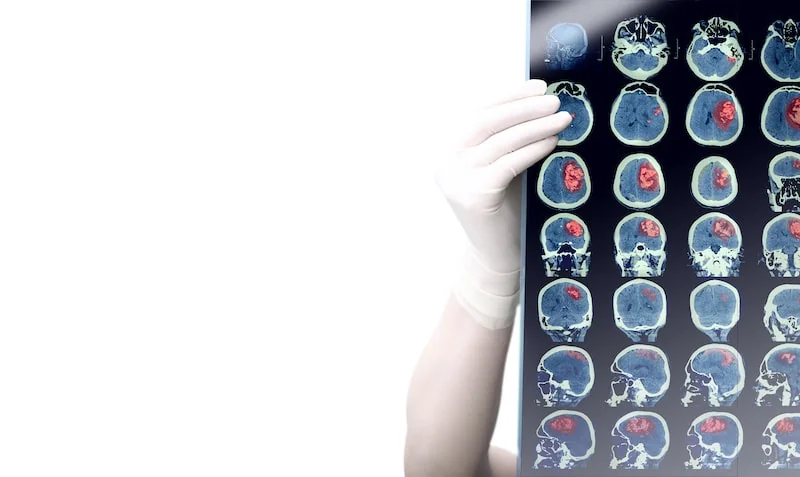
According to the definition given by the World Health Organization (WHO), an ischaemic stroke is:
„a clinical syndrome consisting of rapidly developing clinical signs of focal (or global in case of coma) disturbance of cerebral function lasting more than 24 hours or leading to death with no apparent cause other than a vascular origin.”
Put simply, an ischaemic stroke is a condition characterised by the sudden onset of focal or global clinical signs that last longer than 24 hours or lead directly to death and that have a vascular cause. The resulting deficits later call for individual neurological rehabilitation programmes.
It is worth noting that this is a shared definition covering both ischaemic stroke and haemorrhagic stroke, i.e. a brain haemorrhage. Because the WHO definition does not distinguish between the different types of stroke, let alone their subtypes, clinical and pathophysiological classifications have been introduced into practice.
Ischaemic stroke – classification
The most widely used classification of ischaemic strokes comes from the Oxfordshire Community Stroke Project Classification (OCSP). According to it, ischaemic stroke is divided into:
- lacunar stroke,
- total anterior circulation stroke,
- partial anterior circulation stroke,
- posterior circulation (vertebrobasilar) stroke.
Ischaemic stroke – symptoms
- facial asymmetry, shown by a drooping corner of the mouth,
- slurred speech,
- difficulty smiling,
- problems with balance and walking.
Ischaemic stroke – the most common deficits resulting from an ischaemic stroke
- paralysis or paresis of the arm and hand,
- spastic muscle tension,
- sensory disturbances,
- speech difficulties requiring speech and language therapy,
- visual disturbances.
Ischaemic stroke – stroke risk factors
| Non-modifiable | Modifiable |
|---|---|
| Advanced age (risk increases with age) | Social status, occupation, income and lifestyle |
| Male sex | Obesity |
| Ethnic group | Low physical activity or a lack of it |
| Genetic predisposition | Smoking tobacco products |
| Excessive alcohol consumption | |
| Uncontrolled high blood pressure | |
| Diabetes | |
| High cholesterol | |
| Previous strokes or TIA | |
| Atherosclerosis | |
| Atrial fibrillation | |
| Heart defects |
Read next
Loss of speech after a stroke. Aphasia and the role of the speech therapist in the therapy process.
Aphasia after a stroke is the loss of the ability to understand and produce speech. We explain the types of aphasia, the role of the speech therapist and the directions rehabilitation can take.
Read more →
Can every stroke patient be rehabilitated?
Whether rehabilitation after a stroke is possible depends on the patient’s health, the time since the event and the right choice of therapy. We explain when rehabilitation is possible and how to find the right course of action.
Read more →
When should rehabilitation after a stroke begin?
Early rehabilitation after a stroke usually starts on the neurology ward, but its scope and pace always depend on the patient’s condition and the doctor’s decision.
Read more →
Stroke – brain areas and the effects of brain damage.
The brain is the source of our identity, intellect and emotions. Here is a short guide to the different areas of the brain and the deficits that can arise when they are damaged by an ischaemic stroke.
Read more →
Stroke – emotions, mood and depression
A stroke can damage the brain structures responsible for regulating emotions and mood, which is why depression, anxiety, motivation problems and difficulties with rehabilitation can appear afterwards.
Read more →
Stroke symptoms: how to recognise them and how to respond?
Recognising the symptoms of a stroke quickly and calling for help immediately can save a life and reduce the risk of lasting complications.
Read more →
Spinal cord injury vs spinal cord stroke. What is the difference?
A spinal cord injury and a spinal cord stroke are two distinct conditions with different causes, prognosis and potential deficits. We explain the key differences and the typical consequences of spinal cord damage.
Read more →
10 most common mistakes made by neurological physiotherapists.
Karolina Łozińska describes the most common mistakes made during neurological therapy and the working principles that help to avoid them.
Read more →
Memory loss after a stroke. What it involves and what can help.
Memory loss after a stroke can involve difficulty remembering words, recognising places and learning new things. We explain what can help in everyday functioning and therapy.
Read more →
The next step
Let's talk
We are here to answer any questions you may have about the rehabilitation process.
Describe your case
Send us the details of the patient's condition and we will assess them from a therapeutic perspective.
Email consultation
Write to us describing the condition and the patient's current state of health. We will reply with our view of your situation in the context of rehabilitation.
Video of the patient
You can send us a video showing the patient's current condition. We will respond to your situation and explain the therapeutic options available.