Rehabilitation after a bleed (haemorrhagic stroke)
NORMAN Neurological Rehabilitation Centre
Therapy results
What patients say about us
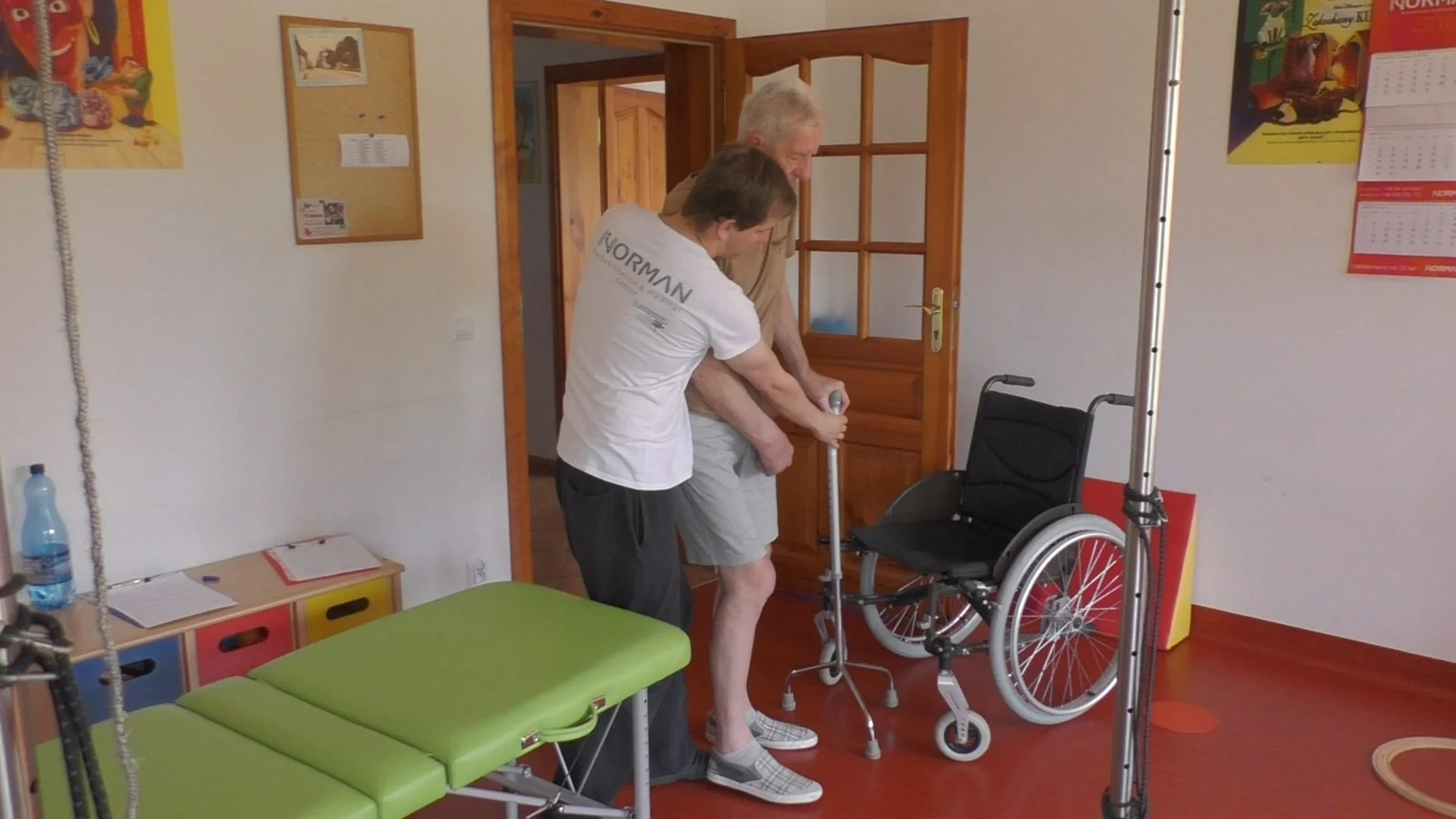
Rehabilitation after a bleed is an everyday, informal way of describing rehabilitation following a stroke. As is well known, a stroke can be either haemorrhagic or ischaemic. It is the former that tends to have more serious consequences and carries a higher mortality rate. However, just as with an ischaemic stroke, prompt help and specialist care offer a real chance of regaining full or partial function.
Recovery after a stroke. How long can it take?
To begin to estimate how long recovery takes and how long rehabilitation after a stroke lasts, you first need to redefine what health actually means for the individual patient. Rehabilitation is a long-term process, so it is worth setting small, realistic goals from the outset — ones that can be measured over a short period. This is a safer approach than picturing health as it was before the stroke. When progress towards regaining function is slow, this helps avoid loss of motivation. Small successes bring joy not only to the family, but also to the person directly affected. These are what it is worth focusing on.
Recovery after a stroke certainly includes regaining physical function — that is, becoming less dependent on loved ones and independent once again. Recovery might mean tying your own shoelaces or using the toilet unaided, and in very severe cases moving away from tube feeding and regaining the sense of taste.
Much depends on the care the patient receives after a stroke, as well as on individual predisposition. It sometimes happens that a person with greater deficits recovers faster than a patient who, at first glance, appears to be in better shape. There is also what is known as apparent recovery. Even when progress is considerable, the decision to end rehabilitation should be taken with caution, because stopping too soon can lead to regression.
Health and life after a stroke have to be defined anew. This does not mean they have to be worse — simply different from before.
The loss of life as it was
People who have had a stroke, whether haemorrhagic or ischaemic, are often unable to return to their working lives. Damaged areas of the brain cause motor deficits, loss of the ability to speak, known as aphasia, and frequently difficulties with quick, logical thinking and problem-solving. Intensive stimulation of the brain through neurological rehabilitation, speech rehabilitation and neuropsychological rehabilitation makes it possible to regain lost functions. It also happens that people who have had a stroke discover new aptitudes and abilities that were previously less active.
There are also people who make a full recovery, which in itself can motivate other patients and their families to take action.
What hope does rehabilitation after a bleed offer?
A great deal. Whether the stroke was haemorrhagic or ischaemic, there is no reason to hesitate over therapy. In most cases, professional rehabilitation after a stroke is effective and helps to regain functions that make full or partial independence possible for the person affected. What is crucial, however, is that therapy is delivered by qualified specialists and tailored to the patient’s actual deficits.
The perspective of a team that works with such patients every day can also be helpful. Norman Łoziński, director of the NORMAN Centre, has emphasised that the centre admits not only patients after ischaemic strokes but also after haemorrhagic strokes, including strokes affecting the brainstem, and that the aim of therapy is to regain the maximum function that modern neurological physiotherapy and the patient’s individual predisposition allow.
What can you do to improve the chances of recovery after a stroke?
The patient is admitted to hospital. Once their condition has stabilised and the immediate threat to life has passed, they usually undergo rehabilitation on a hospital rehabilitation ward and are then discharged home. The family can genuinely improve the patient’s chances of regaining function by ensuring continuity of care and proper organisation of further therapy from the very start.
- Even before discharge from hospital, it is worth looking into both outpatient rehabilitation and rehabilitation stays after a stroke, because any break at this early stage is unfavourable. When the patient’s condition makes travelling impossible, a neurological physiotherapist who visits at home should be arranged.
- If the family is struggling to cope with the new situation, it is worth seeking support from a psychologist. Recovery after a stroke depends enormously on the mental strength and patience of the patient’s loved ones.
- It is important to remember that a person who has had a stroke often experiences the collapse of life as they knew it and may not react the way the family expects. Small successes and calm communication help them gradually regain motivation.
- It is best to choose a centre that provides comprehensive care from an interdisciplinary team: a neurological physiotherapist, a speech and language therapist, a neuropsychologist and a rehabilitation physician.
- It is also worth supporting your loved one simply through your presence. Being able to stay with family during rehabilitation can matter to the patient as much as the therapy itself, and helps them get through the hardest period of treatment.
Read next
Loss of speech after a stroke. Aphasia and the role of the speech therapist in the therapy process.
Aphasia after a stroke is the loss of the ability to understand and produce speech. We explain the types of aphasia, the role of the speech therapist and the directions rehabilitation can take.
Read more →
Can every stroke patient be rehabilitated?
Whether rehabilitation after a stroke is possible depends on the patient’s health, the time since the event and the right choice of therapy. We explain when rehabilitation is possible and how to find the right course of action.
Read more →
When should rehabilitation after a stroke begin?
Early rehabilitation after a stroke usually starts on the neurology ward, but its scope and pace always depend on the patient’s condition and the doctor’s decision.
Read more →
Stroke – brain areas and the effects of brain damage.
The brain is the source of our identity, intellect and emotions. Here is a short guide to the different areas of the brain and the deficits that can arise when they are damaged by an ischaemic stroke.
Read more →
Stroke – emotions, mood and depression
A stroke can damage the brain structures responsible for regulating emotions and mood, which is why depression, anxiety, motivation problems and difficulties with rehabilitation can appear afterwards.
Read more →
Stroke symptoms: how to recognise them and how to respond?
Recognising the symptoms of a stroke quickly and calling for help immediately can save a life and reduce the risk of lasting complications.
Read more →
Spinal cord injury vs spinal cord stroke. What is the difference?
A spinal cord injury and a spinal cord stroke are two distinct conditions with different causes, prognosis and potential deficits. We explain the key differences and the typical consequences of spinal cord damage.
Read more →
10 most common mistakes made by neurological physiotherapists.
Karolina Łozińska describes the most common mistakes made during neurological therapy and the working principles that help to avoid them.
Read more →
Memory loss after a stroke. What it involves and what can help.
Memory loss after a stroke can involve difficulty remembering words, recognising places and learning new things. We explain what can help in everyday functioning and therapy.
Read more →
The next step
Let's talk
We are here to answer any questions you may have about the rehabilitation process.
Describe your case
Send us the details of the patient's condition and we will assess them from a therapeutic perspective.
Email consultation
Write to us describing the condition and the patient's current state of health. We will reply with our view of your situation in the context of rehabilitation.
Video of the patient
You can send us a video showing the patient's current condition. We will respond to your situation and explain the therapeutic options available.