When to start stroke rehabilitation and how to do it?
NORMAN Neurological Rehabilitation Centre
Therapy results
What patients say about us
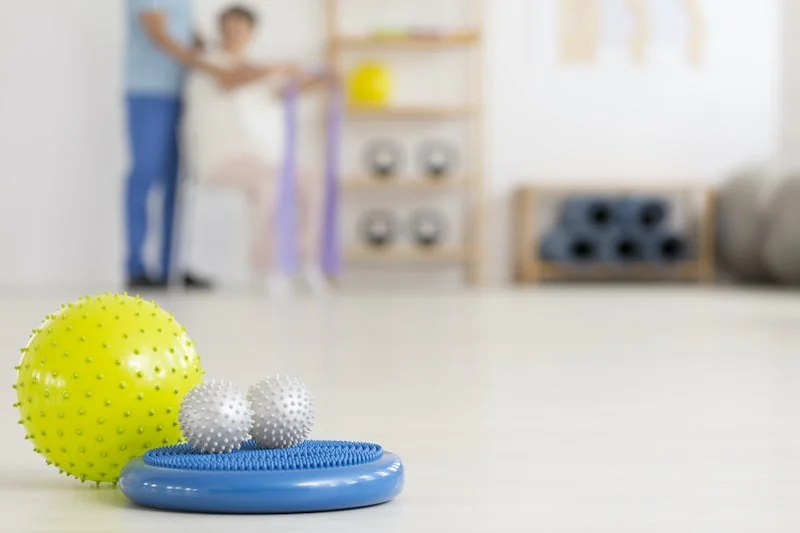
Rehabilitation after a stroke should be started as soon as possible. For this process to begin, all vital signs must be stable. The decision to start rehabilitation is made by the doctor.
Introducing rehabilitation quickly helps to engage the patient more actively in their further recovery and has a positive effect on their motivation to keep working on themselves. One of the fundamental goals of early rehabilitation is also to prevent the complications that arise from keeping the patient immobile for too long.
- The development of abnormal movement patterns.
- Joint contractures.
- Respiratory and psychological problems arising from a sense of helplessness and feeling of no longer being of use.
In the initial phase after a stroke, we focus on basic functions. Patients often have trouble swallowing, and their respiratory capacity can be reduced. This is why, alongside standard rehabilitation, it is worth introducing swallowing and speech therapy early, led by a neurological speech and language therapist.
Swallowing problems can lead to malnutrition and weakening of the whole body, which prolongs the rehabilitation process and reduces its quality.
It is very important to change the patient’s position frequently, ideally every 2–3 hours. This limits the entrenching of abnormal movement patterns and helps to shape muscle tone, which is very important in the further course of rehabilitation.
To begin with, we teach the patient basic activities: sitting, standing up, rolling onto their side, dressing, personal hygiene and, finally, walking and keeping their balance from scratch. Early mobilisation into an upright position is very important, although the decision to begin it always rests with the doctor.
Patients who are mobilised upright early usually have fewer problems with abnormally increased muscle tone and with contractures at a later stage of recovery.
Principles that matter in the first stage of rehabilitation
- You should not pull on the paralysed limbs, because their muscles are very weak and additional stretching can lead to a dangerous partial dislocation of the joint.
- If possible, the patient should eat their meals sitting up rather than lying down or in a semi-seated position, as this makes swallowing easier.
- The patient should not use the hospital bedside pull-up bars, as they disrupt the correct working of the muscles and entrench poor movement habits.
- A paralysed upper limb should not hang passively, because its weight and the pull of gravity strain the shoulder, ligaments, nerves and muscles.
In the initial phase the patient should use a pressure-relieving mattress, but once they have learnt to change position it should be set aside, so as not to accustom the patient to staying in one position for a long time and not to deepen problems with perception and spatial orientation.
Respiratory rehabilitation is also important, as a way of preventing bronchitis and pneumonia. In the first stage, the patient’s back should be patted frequently to prevent secretions from building up. Changing position and mobilising the patient upright further support the prevention of respiratory complications.
After a stroke, every rehabilitation process runs differently. Much depends on the location and extent of the brain damage and on the time that passed between the onset of symptoms and medical intervention. We write more about what to look out for in the early stage of recovery in a separate article. The brain’s compensatory plasticity can sometimes bring very quick results, while in other cases it requires longer, systematic work.
The first year after a stroke is a crucial period, because this is when the patient forms the movement patterns they will use in their later functioning. This does not mean, however, that improvement stops after a year. Systematic rehabilitation — for example as part of intensive neurological rehabilitation stays — can bring benefits throughout life, although it is worth making the most of the greatest intensity of recovery right at the start. That is why, after a stroke, a patient should undergo rehabilitation 5–6 days a week in order to maximise the results of therapy.
Read next
Loss of speech after a stroke. Aphasia and the role of the speech therapist in the therapy process.
Aphasia after a stroke is the loss of the ability to understand and produce speech. We explain the types of aphasia, the role of the speech therapist and the directions rehabilitation can take.
Read more →
Can every stroke patient be rehabilitated?
Whether rehabilitation after a stroke is possible depends on the patient’s health, the time since the event and the right choice of therapy. We explain when rehabilitation is possible and how to find the right course of action.
Read more →
When should rehabilitation after a stroke begin?
Early rehabilitation after a stroke usually starts on the neurology ward, but its scope and pace always depend on the patient’s condition and the doctor’s decision.
Read more →
Stroke – brain areas and the effects of brain damage.
The brain is the source of our identity, intellect and emotions. Here is a short guide to the different areas of the brain and the deficits that can arise when they are damaged by an ischaemic stroke.
Read more →
Stroke – emotions, mood and depression
A stroke can damage the brain structures responsible for regulating emotions and mood, which is why depression, anxiety, motivation problems and difficulties with rehabilitation can appear afterwards.
Read more →
Stroke symptoms: how to recognise them and how to respond?
Recognising the symptoms of a stroke quickly and calling for help immediately can save a life and reduce the risk of lasting complications.
Read more →
Spinal cord injury vs spinal cord stroke. What is the difference?
A spinal cord injury and a spinal cord stroke are two distinct conditions with different causes, prognosis and potential deficits. We explain the key differences and the typical consequences of spinal cord damage.
Read more →
10 most common mistakes made by neurological physiotherapists.
Karolina Łozińska describes the most common mistakes made during neurological therapy and the working principles that help to avoid them.
Read more →
Memory loss after a stroke. What it involves and what can help.
Memory loss after a stroke can involve difficulty remembering words, recognising places and learning new things. We explain what can help in everyday functioning and therapy.
Read more →
The next step
Let's talk
We are here to answer any questions you may have about the rehabilitation process.
Describe your case
Send us the details of the patient's condition and we will assess them from a therapeutic perspective.
Email consultation
Write to us describing the condition and the patient's current state of health. We will reply with our view of your situation in the context of rehabilitation.
Video of the patient
You can send us a video showing the patient's current condition. We will respond to your situation and explain the therapeutic options available.