Speech therapy after a stroke – a guide and speech exercises
Kamila Jastrzębska, MA
speech and language therapist, special-needs educator, diagnostician, educational therapist and EEG biofeedback neurotherapist (NORMAN Centre, Koszalin)
Therapy results
What patients say about us
Speech therapy after a stroke is one of the key elements of a patient’s return to independence and an important part of comprehensive stroke rehabilitation. For many families, the first days after a stroke mean a flood of confusing information, helplessness and fear about whether their loved one will regain the ability to communicate. This guide sets out the most important points: how to understand speech disorders, how to support the patient safely and which exercises can already be done at an early stage.
The most common difficulties involve not only speaking itself, but also understanding what is said, naming objects, reading, writing, swallowing and the movement of the facial muscles. This is precisely why speech therapy after a stroke is not limited to repeating words. The best results come when it begins early enough, which is why it is worth knowing when to start rehabilitation after a stroke. It also involves working on the articulatory apparatus, breathing, communication with others and rebuilding basic language functions.
Step one – understanding the condition
In the first hours and days after a stroke, it is hugely important to understand the type of damage involved. Ischaemic and haemorrhagic stroke differ in their mechanism and in the options for acute treatment, but at a later stage both can lead to similar deficits that require rehabilitation. For the family, however, what matters is not only the type of stroke but also where the brain damage occurred.
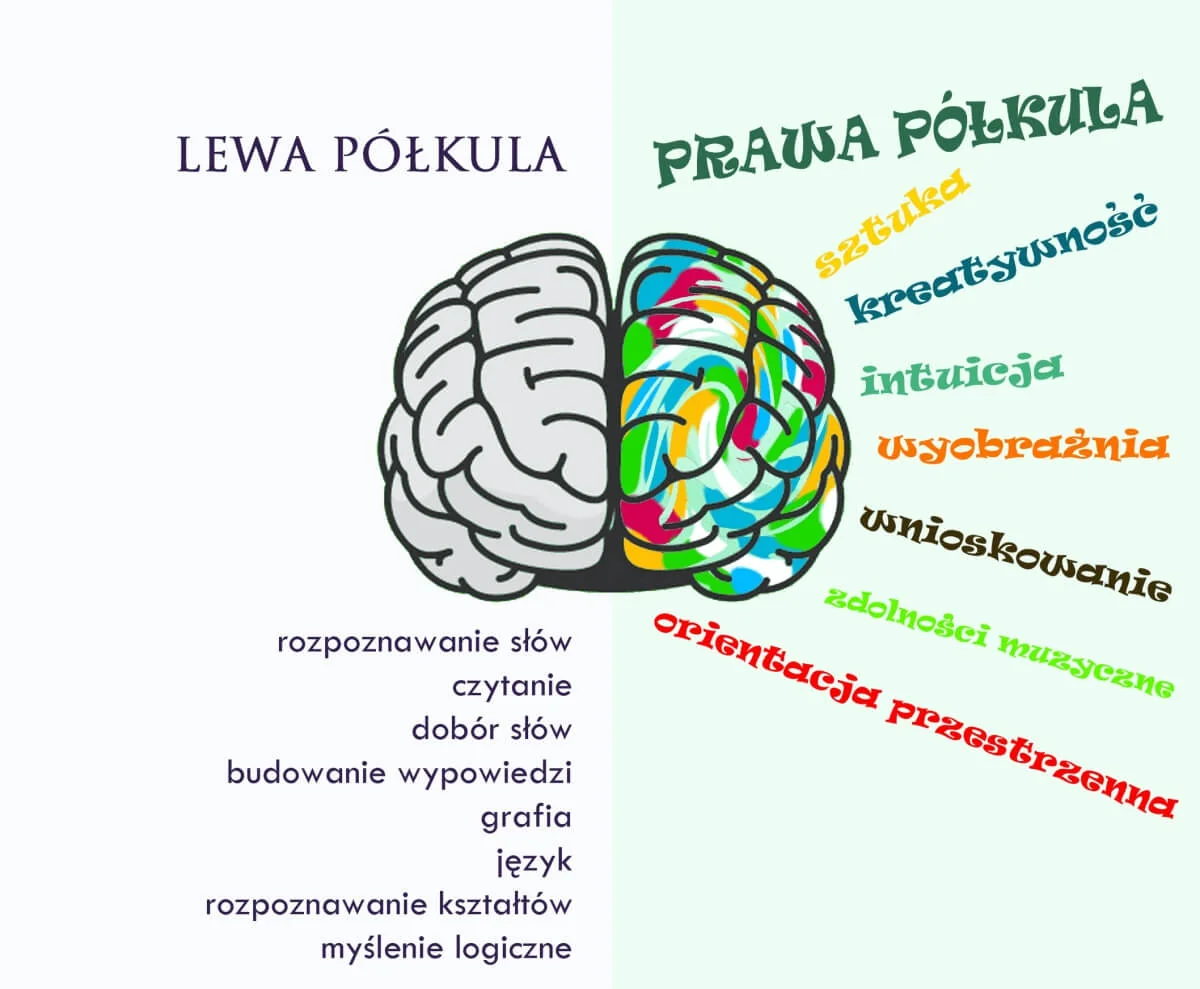
A left-sided stroke is more often linked to language difficulties: understanding speech, forming sentences, naming objects and reading. A right-sided stroke more often causes emotional disturbances, difficulty concentrating, impulsivity or reduced control over behaviour, which are addressed by cognitive rehabilitation. In practice, symptoms are always individual, and the patient’s condition in the first few days can be very changeable, which is why successive speech assessments may vary — and this does not mean a diagnostic error.
- Aphasia means the loss or impairment of the ability to communicate, and it can affect understanding, speaking, or both areas at once. We describe what loss of speech after a stroke and aphasia involve in a separate article.
- The most commonly distinguished types are sensory, motor, mixed, amnestic and global aphasia.
- At an early stage the picture of the disorder can change quickly, so it is worth observing the patient over the following days rather than drawing far-reaching conclusions from a single assessment.
- The family should ask the therapy team about the type of stroke, the location of the damage and the current recommendations for communication and swallowing.
Step two – speech exercises for the facial muscles after a stroke
Facial asymmetry is one of the more common consequences of a stroke and often persists even after discharge from hospital. Weakness of the muscles of the lips, tongue and cheeks affects not only facial expression but also articulation, chewing and swallowing. The exercises are best done sitting or in a semi-seated position, in front of a mirror, calmly and regularly. It is worth repeating each task 5 to 10 times, taking 3 deep breaths in and out between sets.
Lip exercises
- A wide smile, returning to the starting position after 3 seconds.
- Pursing the lips as if to blow a kiss and holding the tension for a few seconds.
- Alternating exercises: a kiss and a wide smile performed slowly in a set.
- Puffing air into both cheeks, and then into just the right or the left cheek.
- Moving air from one cheek to the other, as when rinsing the mouth.
- Sucking in and puffing out the cheeks alternately.
- Gently biting the lower and upper lip.
- A straw exercise, if the patient has no swallowing problems and does not choke on liquids.
- A long exhalation onto a pinwheel or bubbles, and a short exhalation as if blowing out a candle.
- Blowing a “raspberry” with relaxed lips and simple sounding out of vowels: a, e, i, o, u, y.
Tongue exercises
- Sticking the whole tongue out and drawing it back in.
- Touching the tip of the tongue to the upper and lower teeth and to the upper and lower lip.
- Alternating exercises: upper lip, lower lip, upper teeth, lower teeth.
- A “pendulum”, that is, touching the right and left corners of the mouth.
- Counting the teeth with the tongue along the upper and lower arch.
- Touching the palate and drawing out the sound “l”.
- Licking the lips and pushing out the cheeks with the tongue, first on the right and then on the left.
Whole-face exercises and tips for swallowing
- Raising the eyebrows as if in surprise and drawing them together as if in anger.
- Alternating eyebrow exercises performed at a slow pace.
- Pressing the lips together and moving them first to the right, then to the left.
- Work in short but regular sessions, because systematic sets improve the quality of speech and strengthen the muscles responsible for chewing and swallowing.
- If dysphagia is present, the consistency of meals should be matched to the patient’s current abilities, and liquids should be given carefully and under supervision.
With swallowing difficulties, safety matters more than the number of exercises. If the patient chokes or has difficulty taking liquids, a specialist must be consulted and the recommendations on diet and positioning during meals must be followed closely.
Step three – how to talk to a patient with aphasia
The inability to communicate freely is one of the most distressing effects of a stroke for the patient. A sense of helplessness, difficulty naming simple objects or forgetting words can quickly lead to frustration and withdrawal. The carer’s attitude has a genuine therapeutic value here.
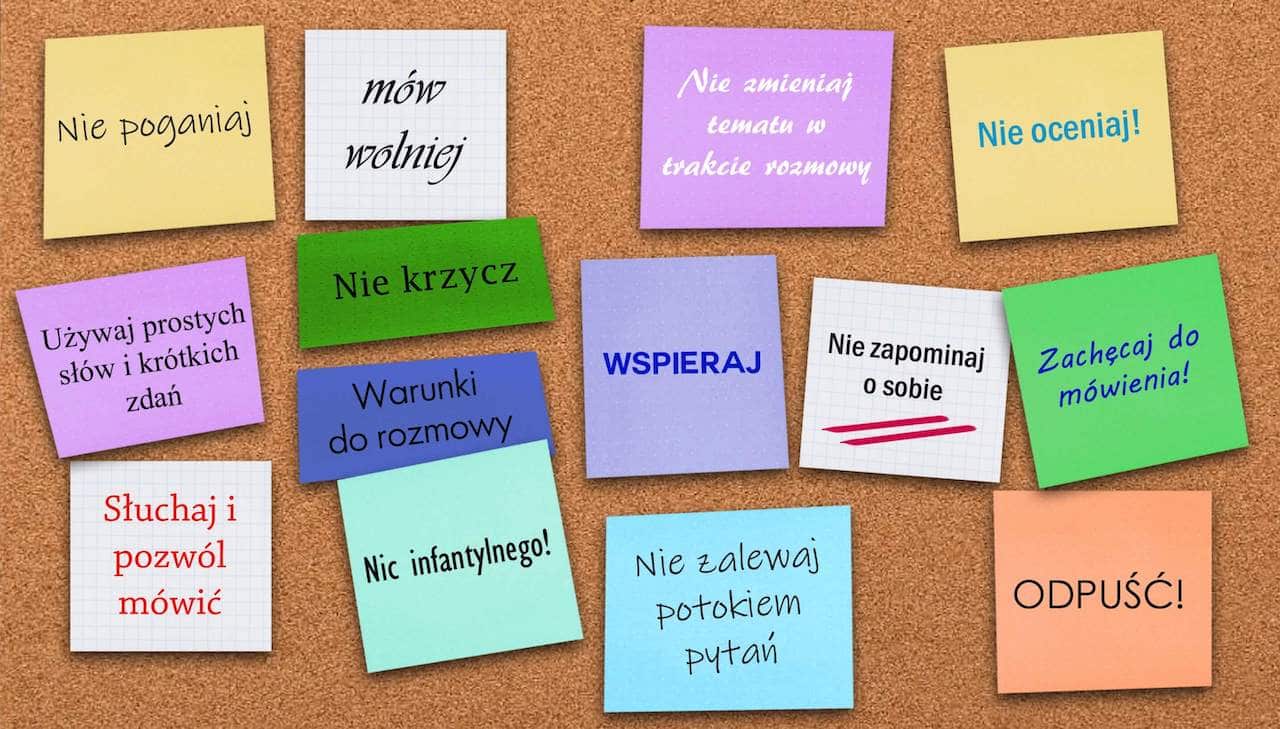
- Speak more slowly and give the patient more time to understand the question and prepare a response.
- Do not rush them and do not fill silences straight away with more questions.
- Do not change the subject mid-conversation, and limit distracting stimuli such as the television or radio.
- Use short, simple sentences and do not ask several questions at once.
- Do not shout. A lack of response does not mean the patient cannot hear.
- Do not finish the patient’s words after the first syllable and do not hurriedly guess what they meant to say.
- Support every attempt to speak and show that the patient’s effort is worthwhile.
- Do not talk down to the patient and do not use materials intended for small children.
- Do not judge or shame. For the patient, even the simplest task can be very hard at this stage.
- If confabulations or incorrect answers appear, do not argue. Gently guide them or let the subject go.
- Remember to look after yourself as a carer too. Tiredness and tension quickly affect the quality of communication with the patient.
Step four – speech exercises after a stroke
It is worth weaving speech exercises into everyday visits to the patient. Short, regular sessions usually work better than a single long and tiring attempt. The aim is not to quiz the patient mechanically, but to gradually unlock communication and build a sense of agency.
Working with automatic sequences
Automatic sequences are words or sequences we usually say in the same order every time — for example counting to 10, the days of the week, the names of the months or the words of a well-known song. For many patients they are a good starting point for getting speech going.
- Prepare cards with the numbers from 1 to 10, arrange them together with the patient and name them one by one.
- Write in large, clear, block capitals, because a stroke can also bring problems with sight or the field of vision.
- Practise the days of the week and the months, first out loud and later with written prompts, if the patient has retained this ability.
- Use familiar songs in your own language. Singing can be easier than speaking and helps to overcome the block.
Working on awareness of one’s own body
It is worth starting early exercises with parts of the body, because these words also come up in the everyday instructions given by the physiotherapist and medical staff. Understanding their meaning supports rehabilitation beyond speech therapy as well.
- To begin with, choose 2 to 4 words, for example hand, leg, tummy.
- Ask the patient to point to a given part of the body on command.
- Then try to name it together, and afterwards on their own.
- When the patient starts to manage the first set of words, gradually add more.
Naming objects
It is best to work with specific, familiar things. Instead of abstract concepts, choose objects the patient can see, touch or associate with everyday use. This makes it easier to combine auditory, visual and tactile cues at the same time.
- Start with clothing, fruit, vegetables or objects near the patient’s bed.
- If you do not have access to real objects, use photographs or cut-outs from shop leaflets.
- Create a simple notebook or folder of words and pictures that you can return to during later exercises.
- If they struggle, offer the first syllable only when you can see that the patient knows what they are looking for but cannot bring out the word.
- Work in short but systematic sessions. Two ten-minute sessions a day usually achieve more than one very long one.
There is no single golden method suitable for every patient with aphasia. Some exercises will be too easy for one person and too hard for another. That is why the most important things are observing the patient, working with the speech and language therapist in charge, and calm, regular work tailored to the current situation.
Read next
Brain tumour – symptoms, treatment, surgery and rehabilitation (a complete guide)
Brain tumour – symptoms, diagnosis, surgery and rehabilitation step by step. Find out what a brain tumour means and what effective treatment looks like. A practical guide for patients and families.
Read more →
Traumatic brain injury (TBI) – rehabilitation – a comprehensive guide for families
A traumatic brain injury is not only an acute event but often a long-term disease process. This guide explains the epidemiology, classification, diagnosis, acute treatment, rehabilitation and long-term care after TBI.
Read more →
Multiple sclerosis (MS) – rehabilitation – a guide for patients and carers
Multiple sclerosis (MS) is a chronic, autoimmune neurological disease in which the immune system attacks the body’s own nerve cells, leading to damage of the myelin sheaths surrounding neurons. MS most often affects young adults between the ages of 20 and 40, and is twice as common in women as in men. The disease follows a highly varied course – most patients experience alternating periods of relapses (flare-ups) and remission,...
Read more →
Loss of speech after a stroke. Aphasia and the role of the speech therapist in the therapy process.
Aphasia after a stroke is the loss of the ability to understand and produce speech. We explain the types of aphasia, the role of the speech therapist and the directions rehabilitation can take.
Read more →
Can every stroke patient be rehabilitated?
Whether rehabilitation after a stroke is possible depends on the patient’s health, the time since the event and the right choice of therapy. We explain when rehabilitation is possible and how to find the right course of action.
Read more →
When should rehabilitation after a stroke begin?
Early rehabilitation after a stroke usually starts on the neurology ward, but its scope and pace always depend on the patient’s condition and the doctor’s decision.
Read more →
Stroke – brain areas and the effects of brain damage.
The brain is the source of our identity, intellect and emotions. Here is a short guide to the different areas of the brain and the deficits that can arise when they are damaged by an ischaemic stroke.
Read more →
Stroke – emotions, mood and depression
A stroke can damage the brain structures responsible for regulating emotions and mood, which is why depression, anxiety, motivation problems and difficulties with rehabilitation can appear afterwards.
Read more →
Stroke symptoms: how to recognise them and how to respond?
Recognising the symptoms of a stroke quickly and calling for help immediately can save a life and reduce the risk of lasting complications.
Read more →
The next step
Let's talk
We are here to answer any questions you may have about the rehabilitation process.
Describe your case
Send us the details of the patient's condition and we will assess them from a therapeutic perspective.
Email consultation
Write to us describing the condition and the patient's current state of health. We will reply with our view of your situation in the context of rehabilitation.
Video of the patient
You can send us a video showing the patient's current condition. We will respond to your situation and explain the therapeutic options available.