After a Stroke – What Next? – GUIDE – Preventing Contractures and Pressure Sores – Part 2
Paweł Powęzka
Therapy results
What patients say about us
An extremely important part of therapeutic and nursing care after a stroke is preventing pressure sores and excessive, unwanted reflexes through appropriate patient positioning. This matters especially for patients who are bedbound or unconscious for a longer period. It is worth becoming familiar with the various positions and how they are used.
Positioning is used to limit localised tissue necrosis caused by restricted blood flow. It is one of the measures described in detail in the guide to the acute phase immediately after a stroke. Choosing the right positions and changing them at the right intervals relieves pressure on the points where the layer between bone and skin is thinnest. This is because pressure most often occurs between bony prominences and the surface the patient is in contact with.
Positioning the patient correctly has other benefits too: it helps re-establish accurate body perception – the sense of where the body is in space – which can be significantly disrupted by a stroke. Choosing the right pillows and wedges gives the patient a sense of a safe body position in space and ensures optimal sensory stimulation. Positions should be changed on average every 2 to 4 hours.
Positions are chosen so that they support appropriate muscle tone. This is important because over-stimulating a particular muscle group through body positioning can trigger excessive muscle tone – a reflex response to stretching, pressure or another stimulus.
For strokes, there are three main positions:
- on the directly affected side,
- on the indirectly affected side,
- on the back.
Each of these positions can be modified to some extent to suit the individual patient, the surroundings and the wedges, pillows or blankets available. Any modifications should not, however, contradict the main principles behind each position.
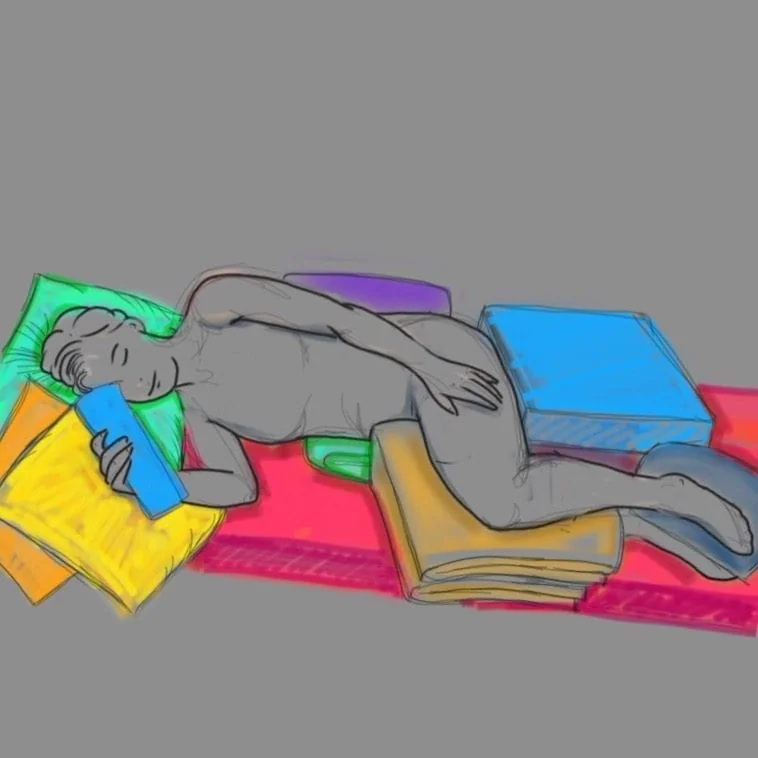
Lying on the directly affected side
The surface on which the stroke patient is placed – usually a pressure-relieving mattress – should keep the spine in a straight line, much like a healthy sleeping position on a suitable mattress. The head rests on a pillow that helps maintain this line.
To give the patient a sense of a safe body position in space, and to stimulate the touch receptors, firm supports or another solid material should be placed under the thighs and behind the back.
Both lower limbs should be bent at the knee and hip joints at a 90-degree angle. It is worth placing a soft material between them to ease the mutual pressure of the bony points, and likewise around the ankle joints.
The directly affected upper limb should be flexed and rotated at the shoulder joint at a 90-degree angle. Correct positioning plays a significant role in the prevention of hand and upper limb paresis. The elbow remains slightly bent and the forearm rests on a pillow. A rolled-up bandage can be placed in the hand, provided this does not trigger an exaggerated grasp reflex.
A variant with the directly affected lower and upper limb extended is also possible, provided this does not trigger unwanted responses.
Lying on the indirectly affected side
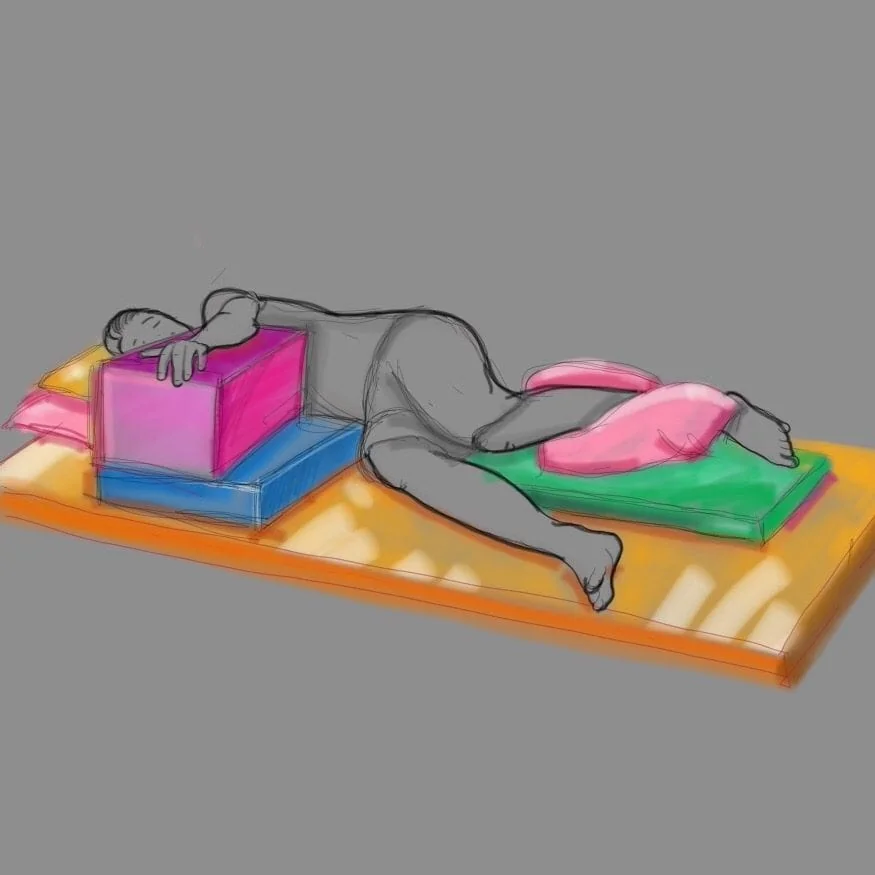
As in the previous position, the surface should keep the spine in a straight line, and the head should rest on a pillow that helps maintain this line.
The directly affected upper limb rests on suitable pillows or supports, parallel to the surface the stroke patient is lying on, and flexed at the shoulder joint at an angle of about 90 degrees.
The lower limb should rest on a pillow high enough that it is not held in excessive adduction. It should be slightly bent at the hip and knee joints.
In this position too, a support or firm pillow should be placed behind the back, to ensure a safe body position in space and to stimulate the touch receptors.
Lying on the back
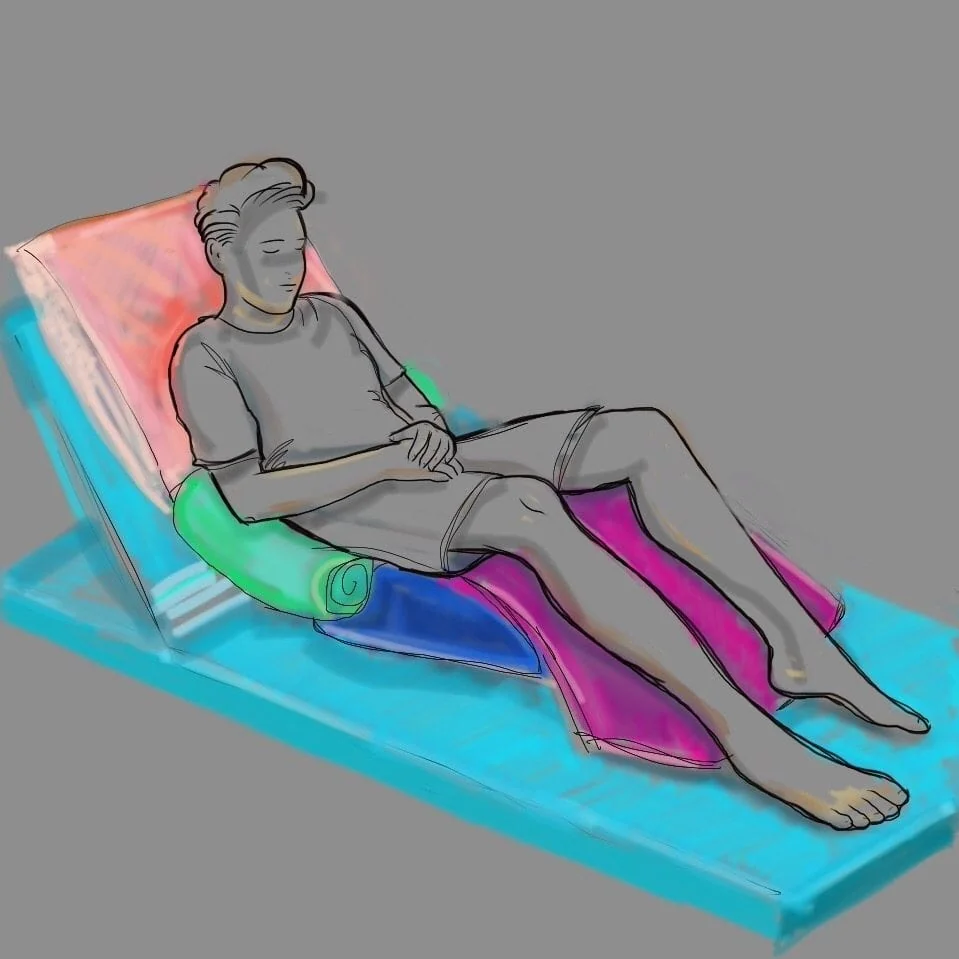
When positioning a stroke patient on the back, it is important to watch how they respond, because the two sides of the body may receive different sensory information, which can lead to unwanted reactions. You should observe whether excessive muscle tone and psychomotor agitation appear in this position.
In the first variant, the trunk and head are positioned high on pillows, while pillows and supports provide slight flexion at the hip and knee joints.
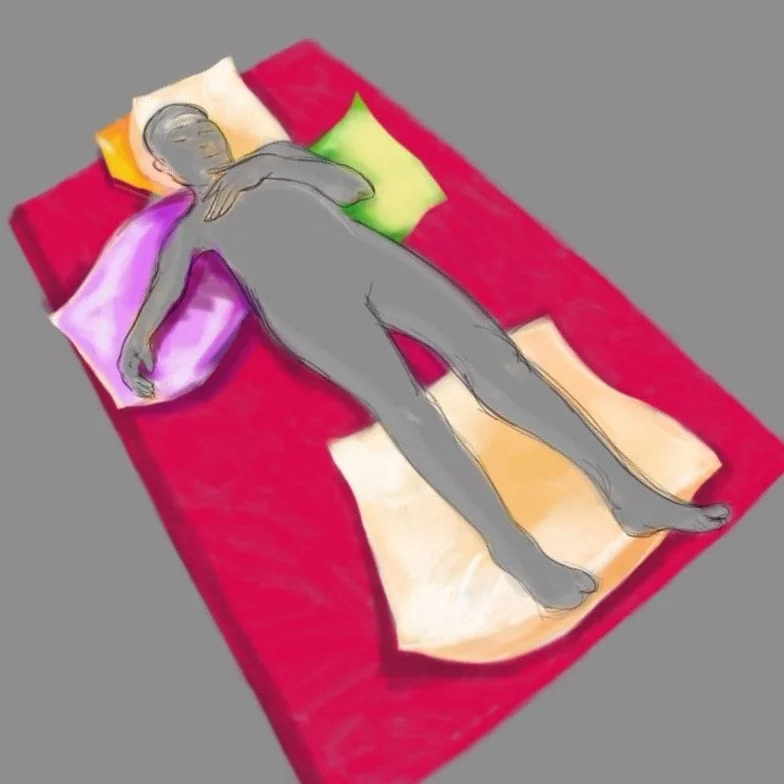
The second variant of lying on the back is a position in which the affected limb rests on a pillow in slight abduction, with a pillow under the lower legs allowing slight flexion at the knee and hip joints.
In summary, positioning plays an important role in early rehabilitation and nursing care and is one element of stroke rehabilitation and neurological rehabilitation programmes. Its purpose is to limit unwanted reflex reactions and prevent pressure sores. If pain, clear attempts to avoid a position, or very heightened muscle tone appear, the patient should not be forced into that position. Any potential contraindications to a given position must always be taken into account.
References
- Benedikt Bömer, „PNF w Neurologii”, Kraków 2013.
- Anna Kiss Feherne, „NDT Bobath dla dorosłych”, Warszawa 2011.
- „Usprawnianie po udarze mózgu”, Elipsa-Jaim s.c., Kraków 2004.
- „Metoda NDT-Bobath w neurorehabilitacji osób dorosłych”, PZWL, Warszawa 2012.
Read next
Loss of speech after a stroke. Aphasia and the role of the speech therapist in the therapy process.
Aphasia after a stroke is the loss of the ability to understand and produce speech. We explain the types of aphasia, the role of the speech therapist and the directions rehabilitation can take.
Read more →
Can every stroke patient be rehabilitated?
Whether rehabilitation after a stroke is possible depends on the patient’s health, the time since the event and the right choice of therapy. We explain when rehabilitation is possible and how to find the right course of action.
Read more →
When should rehabilitation after a stroke begin?
Early rehabilitation after a stroke usually starts on the neurology ward, but its scope and pace always depend on the patient’s condition and the doctor’s decision.
Read more →
Stroke – brain areas and the effects of brain damage.
The brain is the source of our identity, intellect and emotions. Here is a short guide to the different areas of the brain and the deficits that can arise when they are damaged by an ischaemic stroke.
Read more →
Stroke – emotions, mood and depression
A stroke can damage the brain structures responsible for regulating emotions and mood, which is why depression, anxiety, motivation problems and difficulties with rehabilitation can appear afterwards.
Read more →
Stroke symptoms: how to recognise them and how to respond?
Recognising the symptoms of a stroke quickly and calling for help immediately can save a life and reduce the risk of lasting complications.
Read more →
Spinal cord injury vs spinal cord stroke. What is the difference?
A spinal cord injury and a spinal cord stroke are two distinct conditions with different causes, prognosis and potential deficits. We explain the key differences and the typical consequences of spinal cord damage.
Read more →
10 most common mistakes made by neurological physiotherapists.
Karolina Łozińska describes the most common mistakes made during neurological therapy and the working principles that help to avoid them.
Read more →
Memory loss after a stroke. What it involves and what can help.
Memory loss after a stroke can involve difficulty remembering words, recognising places and learning new things. We explain what can help in everyday functioning and therapy.
Read more →
The next step
Let's talk
We are here to answer any questions you may have about the rehabilitation process.
Describe your case
Send us the details of the patient's condition and we will assess them from a therapeutic perspective.
Email consultation
Write to us describing the condition and the patient's current state of health. We will reply with our view of your situation in the context of rehabilitation.
Video of the patient
You can send us a video showing the patient's current condition. We will respond to your situation and explain the therapeutic options available.